Routes Built for a Larger Workforce: Redesigning Delivery Networks as Driver Availability Tightens
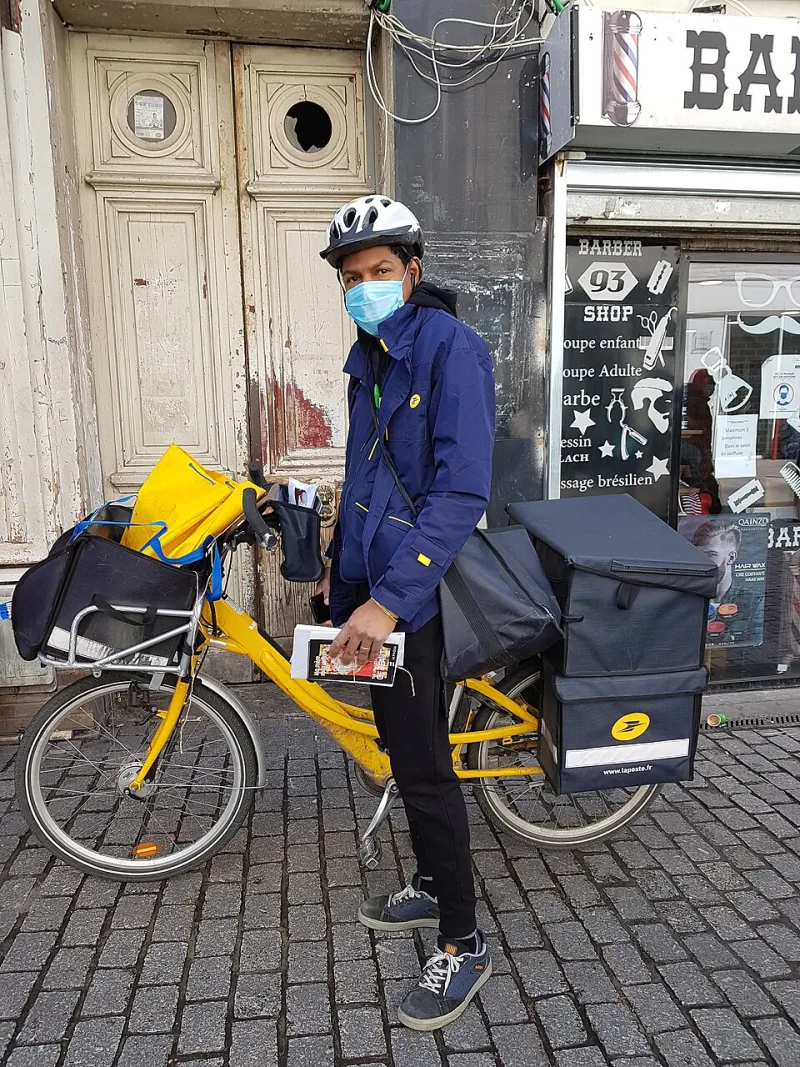
Photo: Donna Alvita, CC BY-SA 4.0, via Wikimedia Commons
The Shortage Is Real, but It Is Not Only a Hiring Problem
US businesses have spent several years responding to driver shortages with the tools that are easiest to deploy: higher pay, signing bonuses, retention incentives, and, when those fail, route cuts. Those tools are not irrelevant. Labor markets respond to compensation. But they treat the symptom as if it were the disease. The deeper problem is that many delivery networks were designed around a labor model that assumed flexibility the market no longer reliably provides.
A route plan that depends on overtime, last-minute shift coverage, and drivers who know every stop is a plan that works only when labor is abundant. When drivers are scarce, those assumptions become service failures. The companies that protect service levels will not necessarily be the ones that pay the most. They will be the ones that redesign the work so it can be done by the workforce that is actually available.
The Hidden Assumptions in Traditional Route Design
Most route designs begin with a depot, a set of customer addresses, and a service promise. The optimization engine then minimizes miles or minutes. That is a useful calculation, but it embeds assumptions that rarely appear in the model: that drivers can start at any time, that overtime is available, that volume spikes can be absorbed by stretching existing routes, and that every customer expects the same delivery window.
When labor is tight, those assumptions become constraints. A route that requires a ten-hour day to complete may be mathematically efficient but operationally fragile. A delivery window that forces a driver to cross three congested zones between 8 a.m. and 10 a.m. may be popular with customers but expensive to staff. A network with one central warehouse may minimize facility cost while maximizing stem time and driver hours.
Density Before Distance
The first lever is route density. A delivery network with more stops per mile is more resilient because it uses fewer driver hours per order. Density can be improved by clustering delivery days by ZIP code or metropolitan area, setting minimum order values for certain zones, and adjusting service calendars so that every neighborhood is not served every day.
This is not the same as cutting service. A business that moves from five-day universal coverage to a zone-based schedule may still offer five-day coverage in dense areas and a three-day schedule in lower-density areas. Customers in the lower-density zones may receive a longer but more reliable promise. The trade-off should be explicit, communicated, and priced into the service model.
Delivery Windows That Respect Labor
Delivery windows are another design choice that is often treated as a customer service requirement rather than a workforce constraint. Narrow windows increase the chance that a driver arrives at the wrong time and has to wait or reschedule. They also make routes harder to sequence. Wider windows, appointment windows for larger accounts, and proactive customer notifications can reduce failed attempts and improve route completion without additional drivers.
Tiered service is a practical option. A business can offer a premium window for customers who need it and a broader window as the standard. The premium service should carry a price that reflects the labor required to deliver it. When every customer receives the same narrow window, the shipper is effectively subsidizing a premium service with a standard rate.
Cross-Docking and Local Partnerships
Cross-docking can reduce driver hours by moving freight between vehicles at an intermediate point rather than sending every vehicle from a central warehouse. A regional cross-dock does not need to be elaborate. It can be a leased bay, a partner facility, or a local carrier's terminal. The purpose is to shorten the final-mile leg and increase the number of stops a driver can complete within a shift.
Local partnerships are the other underused lever. Regional couriers, independent delivery companies, and local trucking firms often have density in areas where a national network does not. A mid-market shipper does not need to own every vehicle to control the customer experience. It needs clear service levels, tracking data, and a contract that makes accountability visible. The partnership should be managed like a carrier relationship, not like an emergency backup.
A Practical Redesign Sequence for Mid-Market Shippers
Start with measurement. Calculate stops per mile, stem time from depot to first stop, average route duration, failed delivery rate, and overtime hours by route. Those numbers will show where the network is relying on labor flexibility that is no longer available.
Next, segment customers by service need rather than treating every order the same. Some accounts require tight windows and premium handling. Others can accept a broader window or a scheduled delivery day. The segmentation should drive the service calendar, not the other way around.
Pilot one change at a time. A zone-based delivery schedule in one metropolitan area, a cross-dock in one corridor, or a local partnership for one set of ZIP codes can be tested without redesigning the entire network. Measure service and cost before expanding.
Finally, communicate the changes to customers before they experience them. A longer window that is reliable is often better received than a narrow window that fails. The goal is not to hide the workforce constraint. It is to design a service model that can be delivered consistently by the workforce the market provides.
Service Levels Without Outbidding the Market
The driver shortage will not be solved by any single shipper. But individual shippers can reduce their exposure by designing routes, windows, and partnerships around the labor that is available. In 2026, the most resilient delivery networks will not be the ones with the largest recruiting budgets. They will be the ones that need fewer driver hours to deliver the same promise.