The Final 10 Miles Are Costing You More Than You Think: Rethinking Last-Mile Delivery for Modern US Businesses

Photo by Photo by Brett Jordan on Unsplash on Unsplash
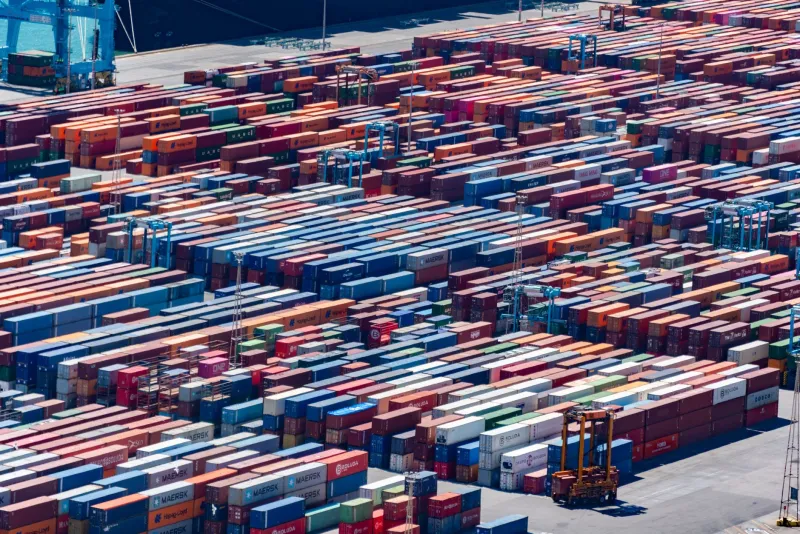
For most businesses, the supply chain feels like a long race — and the finish line should be the easiest part. Goods have crossed oceans, navigated ports, moved through distribution centers, and traveled hundreds of miles by truck. Surely the final stretch, the last 10 miles to a customer's doorstep, should be straightforward.
It is not. In fact, that final segment has become the most costly, logistically complex, and reputationally consequential part of the entire delivery journey. For US businesses operating in an era of next-day and same-day expectations, the last mile is no longer a footnote in the supply chain conversation — it is the defining challenge.
Why Last-Mile Delivery Is Structurally Broken
The economics of last-mile delivery have always been challenging, but several converging forces have made the situation significantly worse over the past five years.
First, consumer expectations have been permanently recalibrated. The widespread adoption of two-day and same-day delivery — normalized by major retail platforms — has created a baseline that smaller businesses and regional carriers struggle to meet profitably. When a customer orders a product on a Tuesday afternoon and expects it by Wednesday evening, the operational window for execution is extraordinarily narrow.
Second, urban density and infrastructure constraints are intensifying. In major US metros like New York, Los Angeles, Chicago, and Houston, delivery drivers face a daily gauntlet of traffic congestion, limited parking, access restrictions, and building security protocols that dramatically extend stop times. A route that appears manageable on a map frequently takes twice as long in practice. The result is fewer stops per driver per day, which translates directly into higher per-delivery costs.
Third, rural delivery presents an entirely different set of problems. Sparsely populated areas across the Midwest, Mountain West, and rural South require longer drive times between stops, making each delivery disproportionately expensive relative to its revenue contribution. Carriers frequently surcharge rural destinations, and in some cases, service frequency is reduced — leaving businesses unable to deliver on their stated timelines.
Finally, labor shortages in the transportation sector continue to strain capacity. Driver turnover rates remain high, training costs are rising, and the pool of qualified commercial and non-commercial delivery personnel has not kept pace with demand growth.
The Margin Math That Demands Attention
Industry data consistently shows that last-mile delivery accounts for between 41% and 53% of total supply chain costs, depending on the sector and delivery density. For e-commerce businesses operating on thin margins — where average order values may fall between $40 and $80 — even a modest increase in last-mile costs per package can eliminate profitability on individual transactions.
Failed deliveries compound the problem significantly. A missed delivery attempt requires a rescheduled drop, which doubles the cost of that shipment. Customer service inquiries, refund requests, and negative reviews follow, adding indirect costs that rarely appear in a logistics budget but are very real in their impact on lifetime customer value.
For businesses that have not rigorously audited their last-mile costs, the financial exposure is likely larger than it appears on the surface.
Emerging Solutions Reshaping the Final Mile
The logistics industry is not standing still. A range of structural and technological solutions are gaining traction across the US market, and businesses that position themselves to take advantage of these developments early will hold a meaningful competitive edge.
Micro-Fulfillment Centers
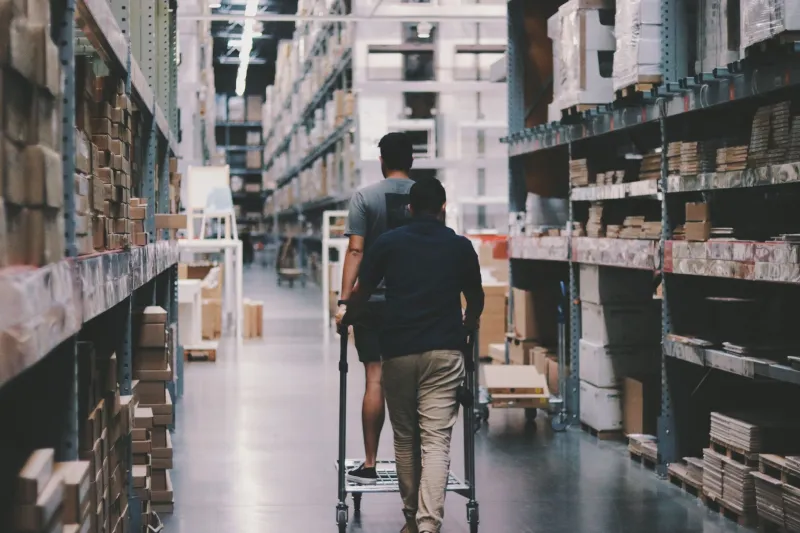
One of the most significant strategic shifts underway is the proliferation of micro-fulfillment centers — smaller, strategically located warehousing nodes positioned closer to population concentrations. Rather than shipping from a single large distribution center located outside a major metro, businesses are increasingly distributing inventory across multiple smaller facilities within or adjacent to urban cores. This reduces the geographic distance of the final mile, compresses delivery windows, and lowers per-delivery fuel and time costs.
Retailers in markets like Dallas, Atlanta, and Seattle are already piloting this model with measurable results in delivery speed and cost reduction.
Dynamic Routing Algorithms
Route optimization software has advanced considerably beyond simple GPS navigation. Modern dynamic routing platforms ingest real-time data — traffic patterns, weather conditions, delivery time windows, vehicle capacity, and stop sequencing — to generate routes that are continuously adjusted throughout the day. For carriers managing dozens or hundreds of stops, even a 10% improvement in route efficiency translates into significant cost savings and on-time delivery rate improvements.
Businesses that partner with logistics providers equipped with these platforms gain the benefit of this intelligence without needing to build it in-house.
Autonomous and Alternative Delivery Pilots
While fully autonomous delivery remains in the pilot phase, several US cities are already seeing limited deployments of sidewalk delivery robots and drone delivery programs. Companies in suburban markets with lower pedestrian density are among the early beneficiaries. Though widespread commercial adoption is likely still several years away, businesses in sectors with high delivery frequency — such as grocery, pharmacy, and restaurant supply — should monitor these developments closely and consider partnerships with platforms that are actively building this infrastructure.
Carrier Diversification and Regional Networks
Relying exclusively on a single national carrier is a risk that many businesses do not fully appreciate until a service disruption occurs. Regional carriers — companies with deep operational knowledge of specific geographic markets — often offer more reliable service, faster transit times, and more competitive pricing within their coverage areas. A deliberate strategy of carrier diversification, matching shipment type and destination to the most appropriate carrier, can meaningfully reduce last-mile costs and failure rates.
What Businesses Can Do Right Now
While macro-level infrastructure shifts take time to materialize, there are concrete actions businesses can take immediately to improve their last-mile performance.
Audit your delivery data. Pull your failed delivery rates, average cost per delivery by zone, and customer complaint data related to shipping. These figures will reveal where your greatest exposure lies and where intervention will generate the fastest return.
Review your delivery promise. If your stated delivery windows are not reliably achievable in certain regions, adjust them. An accurate promise that is consistently kept builds more customer trust than an aspirational window that is frequently missed.
Explore fulfillment partnerships. Third-party logistics providers with distributed fulfillment networks can offer access to last-mile infrastructure that would be prohibitively expensive to build independently. Evaluating these partnerships against your current cost structure is a worthwhile exercise for any business shipping significant volume.
Invest in proactive customer communication. Delivery tracking, automated notifications, and clear exception handling processes reduce inbound customer service volume and improve satisfaction even when delays occur. Customers are generally more forgiving of a late delivery when they are informed proactively than when they are left without information.
The Strategic Imperative
The last mile is not a logistics footnote. It is the moment when every investment in sourcing, manufacturing, warehousing, and transportation either pays off or falls apart in the customer's experience. Businesses that treat it as a fixed, unavoidable cost — rather than a variable that can be actively managed and optimized — will find themselves progressively disadvantaged as competitors sharpen their delivery operations.
The structural challenges are real, but so are the solutions. The businesses that will define the next era of US commerce are the ones investing in smarter last-mile strategy today — before the margin pressure becomes unmanageable.
At Absy Delivery, we believe that seamless supply chains are built on decisions made at every stage of the journey — including, and especially, the final 10 miles.