Fewer Carriers, Higher Stakes: How Trucking Consolidation Is Reshaping Shipping Strategy for US Businesses
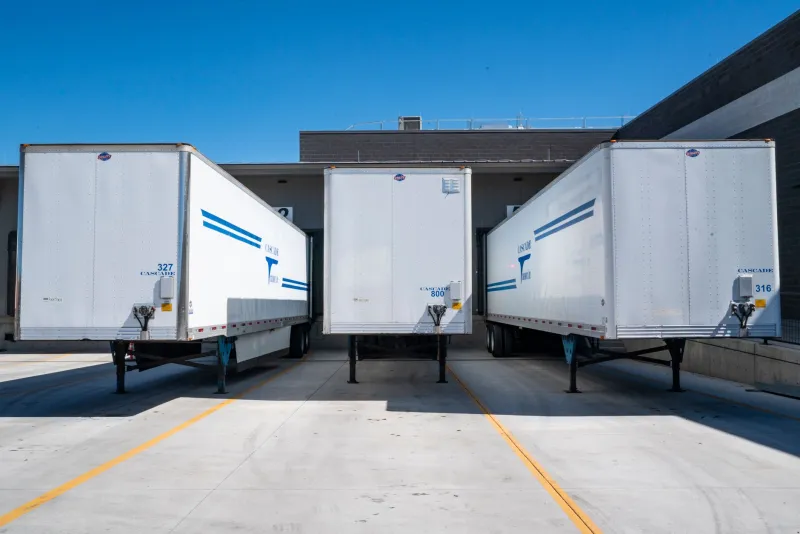
The US freight and trucking industry looks meaningfully different today than it did a decade ago. A wave of mergers, acquisitions, and high-profile carrier failures has reduced the number of competitive players across both the truckload and less-than-truckload (LTL) segments. What was once a fragmented market offering shippers considerable leverage through competitive bidding has become a more concentrated landscape — one where carriers hold more pricing power and shippers have fewer alternatives when rates climb or service deteriorates.
For businesses that ship regularly — whether they are running e-commerce fulfillment operations, managing B2B distribution, or coordinating retail replenishment — this consolidation is not a background industry trend. It is a direct influence on their shipping costs, their delivery reliability, and their ability to meet customer expectations.
How the Market Got Here
The contraction in carrier options has been driven by several converging forces. Thin operating margins in trucking have historically made smaller regional carriers vulnerable during economic downturns. The 2019 freight recession accelerated a round of failures that eliminated meaningful capacity from the market. The COVID-19 pandemic then triggered an extraordinary demand surge that pushed freight rates to historic highs, temporarily masking the structural fragility of the industry.
As that demand normalized, additional carriers — many of which had expanded aggressively during the boom — found themselves overextended. The 2023 bankruptcy of Yellow Corporation, one of the largest LTL carriers in the country, removed a significant volume of capacity from the national network almost overnight. That single event tightened the LTL market in ways that shippers are still navigating.
The result is an industry where a smaller number of large carriers — including FedEx Freight, XPO, Saia, and Old Dominion — now control a larger share of national LTL capacity. In the truckload segment, the dynamic is somewhat different, with a broader base of carriers still operating, but consolidation among brokers and third-party logistics providers has similarly reduced the number of intermediaries shippers can access.
What This Means for Your Shipping Costs
When carrier options contract, pricing power shifts. Businesses that previously negotiated competitive rates by playing multiple carriers against one another find that dynamic weakening. Carriers with strong market positions have less incentive to offer aggressive discounts, and minimum charge structures, fuel surcharges, and accessorial fees have all trended upward in the post-consolidation environment.
For high-volume shippers, this represents a meaningful increase in transportation spend. For smaller and mid-market businesses that lack the volume to command favorable contract terms, the impact is proportionally greater. Spot market rates — which many businesses rely on to fill gaps in their contracted capacity — have become more volatile, offering less predictability for budgeting and margin management.
Service flexibility has also declined in some corridors. With fewer carriers covering certain regional lanes, businesses have less ability to select carriers based on transit time, tracking capability, or claims performance. The default option may be the only option.
Diversifying Your Carrier Network
The most direct response to consolidation risk is reducing dependence on any single carrier or carrier type. Businesses that route the majority of their freight through one or two primary carriers are disproportionately exposed when those carriers raise rates, experience service disruptions, or deprioritize lower-volume customers during periods of capacity tightness.
Building a diversified carrier portfolio requires deliberate effort. It means maintaining active relationships with both national and regional carriers, even when your primary carrier is currently performing well. Regional LTL carriers often offer competitive pricing and superior service quality within their footprint, and they represent a meaningful hedge against national carrier rate increases.
For e-commerce businesses in particular, diversifying across parcel carriers — including regional alternatives to the major national networks — has become a standard risk management practice. Regional parcel carriers have expanded their coverage areas significantly in recent years and frequently offer lower rates and faster delivery times within their zones.
Rethinking Mode and Channel
Consolidation in trucking is also prompting a broader reassessment of shipping mode strategy. Intermodal freight — which combines truck transport for first- and last-mile legs with rail for the long-haul portion — has attracted renewed interest as businesses look for cost-effective alternatives to over-the-road trucking on longer domestic lanes. Rail-based intermodal is generally less expensive than truckload for shipments traveling more than 500 miles, and the rail network has invested in capacity and service reliability improvements in recent years.
Parcel consolidation programs, in which multiple smaller shipments are consolidated into a single larger freight move before being broken down for final delivery, offer another avenue for managing costs in a tighter carrier market. These programs are particularly relevant for businesses shipping consistent volumes to specific geographic markets.
The Role of Third-Party Logistics Partners
For businesses without the internal resources to actively manage a diversified carrier network, partnering with a third-party logistics provider (3PL) offers a practical alternative. 3PLs aggregate volume across multiple clients, which gives them negotiating leverage with carriers that individual mid-market businesses cannot replicate on their own. That leverage translates into access to contracted rates and capacity commitments that would otherwise be unavailable.
Beyond pricing, a well-structured 3PL relationship provides access to technology platforms that offer carrier performance visibility, automated rate comparison, and exception management — capabilities that are increasingly necessary in a market where manual carrier management is both time-consuming and error-prone.
The key is selecting a logistics partner whose carrier network is genuinely diversified and whose technology infrastructure provides the visibility needed to make informed routing decisions. Not all 3PLs are equal in this regard, and the quality of a partner's carrier relationships matters as much as the breadth of their network.
Adapting Before the Next Disruption
Carrier consolidation is not a crisis that has a defined end date — it is a structural feature of the current freight market that businesses need to plan around. The companies that will manage it most effectively are those that treat their carrier strategy as a dynamic, ongoing discipline rather than a set-it-and-forget-it procurement exercise.
Regularly auditing carrier performance, revisiting rate agreements, exploring alternative modes, and maintaining relationships across a broader set of logistics partners are the practical habits that separate businesses with resilient shipping operations from those that find themselves at the mercy of a market with fewer options than it used to have.